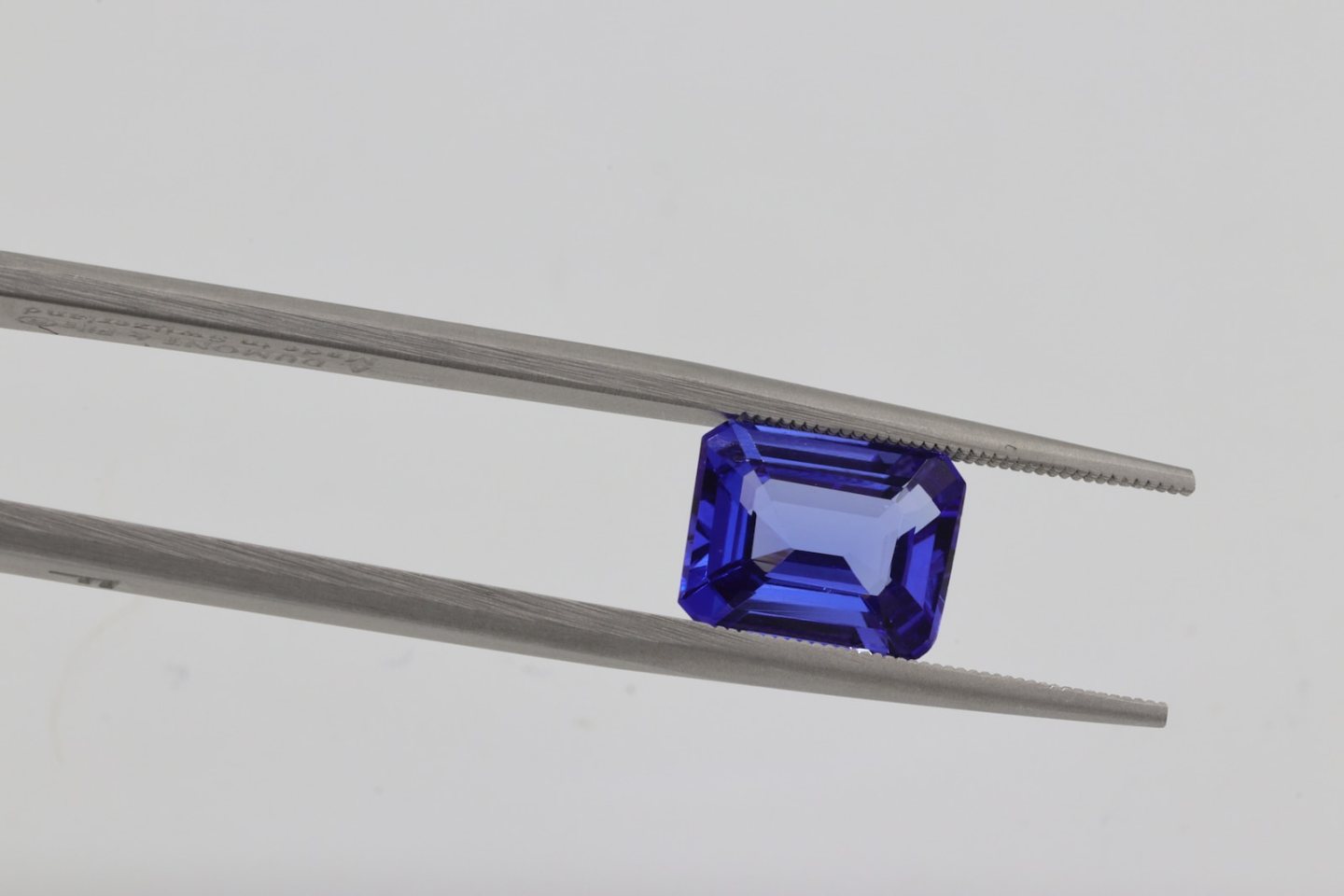
Tanzanite: The Rare Blue Treasure of Tanzania
In the foothills of Mount Kilimanjaro, beneath the dry earth of northern Tanzania, nature concealed a treasure for millions of years.
Its colours seemed to shift with the light—deep blue from one direction, violet from another, and flashes of burgundy or yellow-green from a third. The stone was unlike anything the local prospectors had expected to find.
That extraordinary gemstone would eventually become known as tanzanite.
A Discovery in the Merelani Hills
The story began in 1967 in the Merelani Hills, approximately 40 kilometres southeast of Arusha. Accounts of the discovery vary, but the Gemological Institute of America credits Maasai tribesman Ali Juuyawatu with finding the first tanzanite crystal.
According to the story most often told, Juuyawatu discovered a cluster of unusually transparent blue-to-violet crystals exposed at the surface. He brought the discovery to the attention of Manuel d’Souza, an Arusha-based tailor and part-time prospector.
D’Souza initially believed that the stones might be sapphires. Their brilliant blue colour made the assumption understandable, but tests showed that their physical properties were different. He registered mining claims in the area while samples were sent to experts for further examination.
Gemologists eventually identified the crystals as an exceptionally rare, transparent blue variety of zoisite—a mineral that had been known since the 19th century but had never been seen in such remarkable colour and quality.
A new gemstone had entered the world.
From Blue Zoisite to Tanzanite
The mineral’s scientific description—blue zoisite—was accurate but hardly suited to the luxury-jewellery market.
Recognising the stone’s international potential, Tiffany & Co. became its principal distributor. The company named it “tanzanite” in honour of Tanzania, the only country in which it had been found.
In 1968, Tiffany introduced the gemstone to the international market through a major advertising campaign. Its intense colour, transparency and exotic origin attracted jewellery designers, collectors and customers around the world.
Within a remarkably short time, a stone hidden beneath the Tanzanian soil became one of the most celebrated gemstone discoveries of the 20th century.
Found in Only One Place on Earth
Part of tanzanite’s fascination comes from its extreme geographical rarity.
Commercial-quality tanzanite has been found in only one mining area: a narrow deposit in the Merelani Hills near Mount Kilimanjaro. Unlike diamonds, rubies and sapphires, which occur in several countries, tanzanite is associated with a single known source.
Its formation required an unusual combination of geological conditions, heat, pressure and vanadium-bearing minerals. These conditions came together in this small part of northern Tanzania but are not known to have produced commercial tanzanite anywhere else.
Every genuine tanzanite gemstone, therefore, carries an inseparable connection to Tanzania.
A Gemstone That Changes Colour
One of tanzanite’s most captivating properties is pleochroism—the ability to display different colours when viewed from different directions.
An unheated crystal may reveal blue, violet and yellow-green or brownish tones, depending on its orientation. The final appearance of a polished gemstone is influenced by how the cutter positions and shapes the crystal.
Most tanzanite sold in the jewellery market is gently heated. This stable and widely accepted treatment reduces the brown or yellow-green tones and brings forward the blue and violet colours for which the gem is famous.
Deep, saturated blue and violet-blue stones are generally the most highly valued. Smaller gems often appear lighter, while larger stones can display richer and more dramatic colour.
Beautiful but Delicate
Tanzanite measures approximately 6 to 7 on the Mohs hardness scale. Although suitable for jewellery, it is less resistant to scratches than sapphire and can split if struck sharply because of its natural cleavage.
For this reason, tanzanite jewellery should be handled carefully. Earrings and pendants are generally less exposed to damage, while tanzanite rings benefit from protective settings.
The stone should also be kept away from sudden temperature changes, harsh chemicals and ultrasonic or steam cleaners. Warm water, mild soap and a soft brush are usually the safest choices for cleaning it.
A Modern Birthstone
In 2002, tanzanite was added to the list of December birthstones, joining turquoise, zircon and blue topaz. It is also associated with the 24th wedding anniversary.
This recognition was significant because additions to the modern birthstone list are uncommon. It confirmed tanzanite’s position as one of the world’s best-known contemporary gemstones.
Its relatively recent discovery gives it a different character from gems surrounded by thousands of years of legend. Tanzanite’s story belongs to the modern era—and that story is still being written.
More Than a Beautiful Stone
Tanzanite is more than a luxury jewel. It is a symbol of Tanzania’s geological heritage and a source of livelihoods for miners, cutters, traders and craftspeople.
Its story also reflects the many people behind a gemstone’s journey: the person who first notices something unusual in the earth, the prospector who recognises its potential, the scientists who identify it, the miners who recover it and the artisans who reveal its beauty.
From the rugged landscape of Merelani to jewellery collections around the world, tanzanite has travelled an extraordinary path.
Hold a piece of tanzanite to the light and its colours begin to move—blue becoming violet, violet deepening into purple. Within that changing colour is the story of a landscape, a discovery and a treasure found nowhere else on Earth.
It is not simply a gemstone from Tanzania.
It is Tanzania, captured in stone.
Keep exploring